Artist Tabatha Lionheart (they/them) speaks with Transcend about sunrise snorkels, creative freedom, finding joy in community, and building a life rich in curiosity, love and adventure.
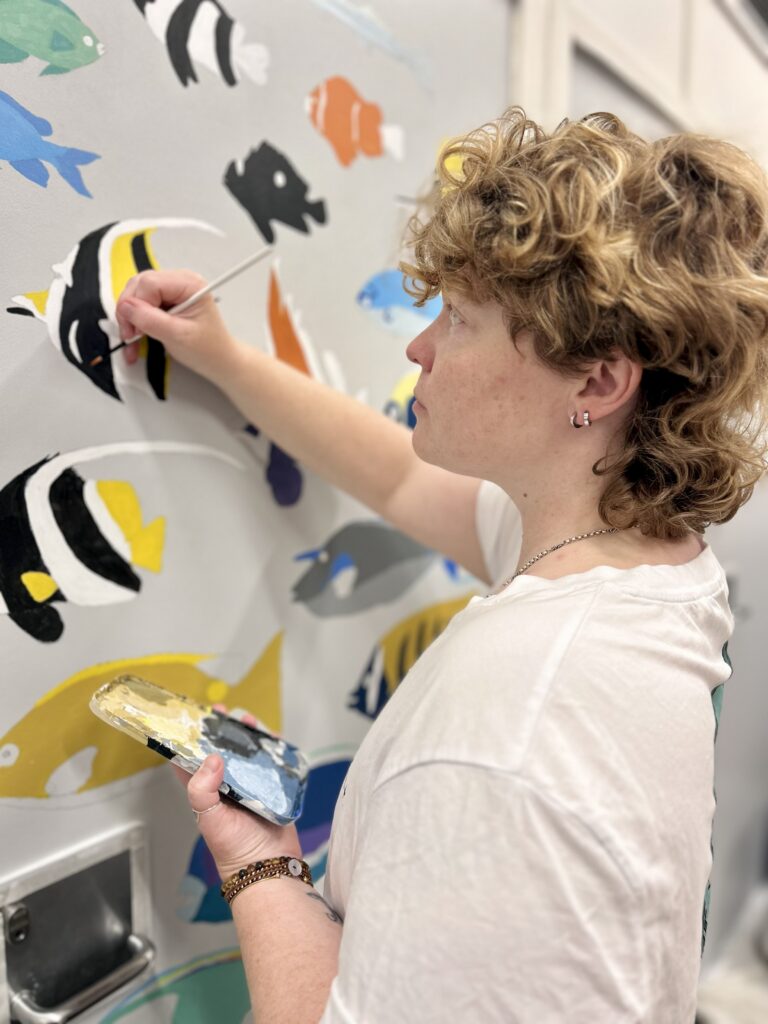
When we spoke with Tabi, they were on Heron Island, painting a library mural filled with the fish, corals and characters of the Great Barrier Reef. Their mornings began with a sunrise snorkel. Then it was back to the mural.
It’s a good snapshot of the life Tabi has made: art, nature, travel and room to follow their curiosity.
Tabi is a non-binary artist whose work spans illustration, painting, performance and wearable art. We spoke about how art helped them understand their gender, the people who gave them room to do that, and what success looks like to them now.
A life filled with curiosity
Where are you finding joy in your life at the moment?
There is just so much joy in my life right now! The ocean is my happy place, and painting is meditative and relaxing, so the combination of the two is utter bliss.
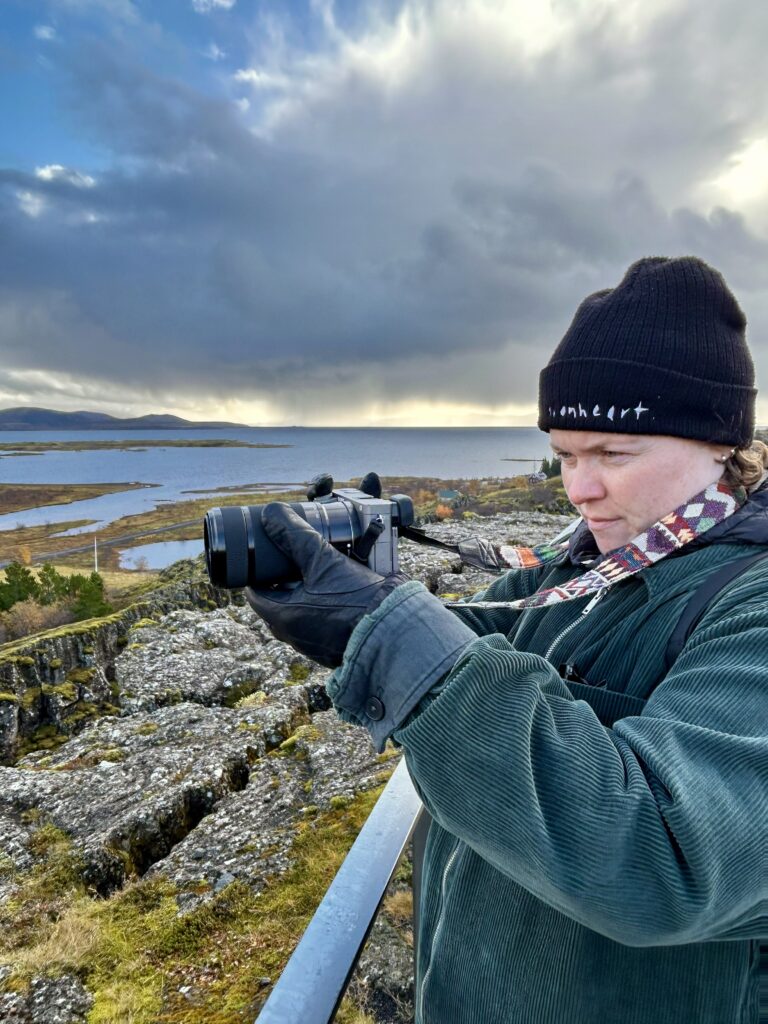
My partner and I also travel full-time while working part-time from wherever we happen to be. I have ‘pinch-me’ moments regularly. In the last year, we’ve watched the northern lights dance in Iceland, slept beneath the stars on the Mongolian steppe, and wandered through lush desert oases in Tunisia.
What does success mean to you at this point in your life?
Success means peace. It’s waking up excited for the day ahead, having the freedom to spend my time creating meaningful work, and building a life that feels rich in experiences rather than possessions.
More than anything, success means being surrounded by people who love and accept me exactly as I am, and encourage me to keep growing and learning.
Art as a way of understanding
How, if at all, does your identity shape the way you move through your work or creative life?
Art has often given me the language to understand myself before I could articulate it. I spent a year drawing trans bodies and characters before coming out as non-binary, unknowingly exploring parts of my own identity through my work.
Sometimes this exploration centres on gender; other times it reflects my emotional landscape.
Bodies appear throughout your portfolio in many different forms. What interests you about the body as a creative subject?
I’ve always been fascinated by the way the body can communicate without words. The way someone moves can reveal so much about their personality, emotions or state of mind. A single gesture can tell an entire story.
I’m also interested in the incredible diversity of bodies and the many forms they can take. Being socialised as female meant my body was often examined, judged and scrutinised.
Exploring the body as a creative subject has become an act of tenderness and reclamation. It’s a chance to observe the body with curiosity, care and respect.
Your website includes work titled Pure Joy Trans. What was the feeling, experience or idea behind that piece?
This piece, and others created around the same time, came from the radical joy of reconnecting with my body after top surgery.
For months after surgery, I had lived with the restriction of a binder, so the simple sensations of fabric against my bare chest, or seeing myself reflected in a mirror, felt profound.
It was a feeling of freedom, familiarity and recognition. I was no longer seeing my body as something to negotiate with, but as something that was truly mine.
Freedom in community
What has community meant to you?
Community has offered freedom. Freedom to ask questions about myself without needing all the answers immediately. Freedom to take up space exactly as I am.
Community reminds me that I don’t have to figure everything out alone. Community is people showing up consistently, in big life moments, but also in all the tiny ones.
Have there been people, spaces or stories that helped you imagine a fuller future for yourself?
My partner, first and foremost.
We hadn’t been together long when we attended Queers of Joy, a Sydney community performance event celebrating queer and trans storytelling. The evening was full of poems and songs and dance, many exploring gender, gender identity and gender expression. The performances were tender, raw and honest, each one resonating in a place I didn’t fully understand yet.
I was quiet on the drive home—definitely out of the ordinary. My friend casually asked if anyone in the car had ever questioned their own gender identity. I burst into tears. A truth I’d been carrying had found its way to the surface.
At first I was afraid of losing this new relationship, losing friends and family, facing judgement, and coming out all over again. But later that night, Bec just smiled at me and said that we needed to celebrate.
“This is a joyful moment, Tabi. This, right here, this is you embracing your whole self. What could be more joyful than that?”
I have never felt more loved or seen than in that moment, and I honestly never looked back. Every moment of self-discovery since then has been powered by this joy.
What would genuine support for trans people look like in everyday life?
Education and taking on the mental load. Trans folks would feel so much safer if they didn’t have to spend so much of their time educating cis folks.
The people who I feel the most supported by, and safest with, are those who proudly and defiantly have my back in public spaces.
It’s my sister correcting the rest of my family when they get my pronouns wrong. It’s my partner using ‘they’ to refer to me so many times in a group conversation it can’t be missed. It’s cis friends taking the time to learn about something that doesn’t affect them personally.
Imagining a fuller future
What would an earlier version of you be surprised or delighted to know about your life now?
As a kid, I really thought you could have one kind of life, and that you needed to focus all your energy and attention on one thing.
My neuro-spicy little brain really struggled with that, and so I think I would be delighted to find that I have built a life that balances and blends so many of my loves, and that I get to do it with such an exceptional and loving partner.
What kind of future do you want trans young people to be able to imagine?
I want young trans people to be able to imagine a future where being trans is just one part of a wonderfully complex and meaningful life.
A future where joy is ordinary, and where they can dream freely about adventures, love, family, careers, travel, and creating a life that feels truly their own.
More than anything, I hope they grow up in a world where they don’t have to spend so much energy defending their existence. Instead, they can focus on discovering who they are, what they love, and the life they want to create.
Trans stories are not defined by hardship alone. They are also stories of laughter, curiosity, creativity, love, adventure, and the small everyday moments that make a life feel full.
Trans people are not just navigating challenges; we are dreaming, creating, exploring, falling in love, travelling, making art, and finding joy.
You can follow Tabatha on Instagram at @tabathalionheart, visit tabathalionheart.com, or reach out to hire them or collabora