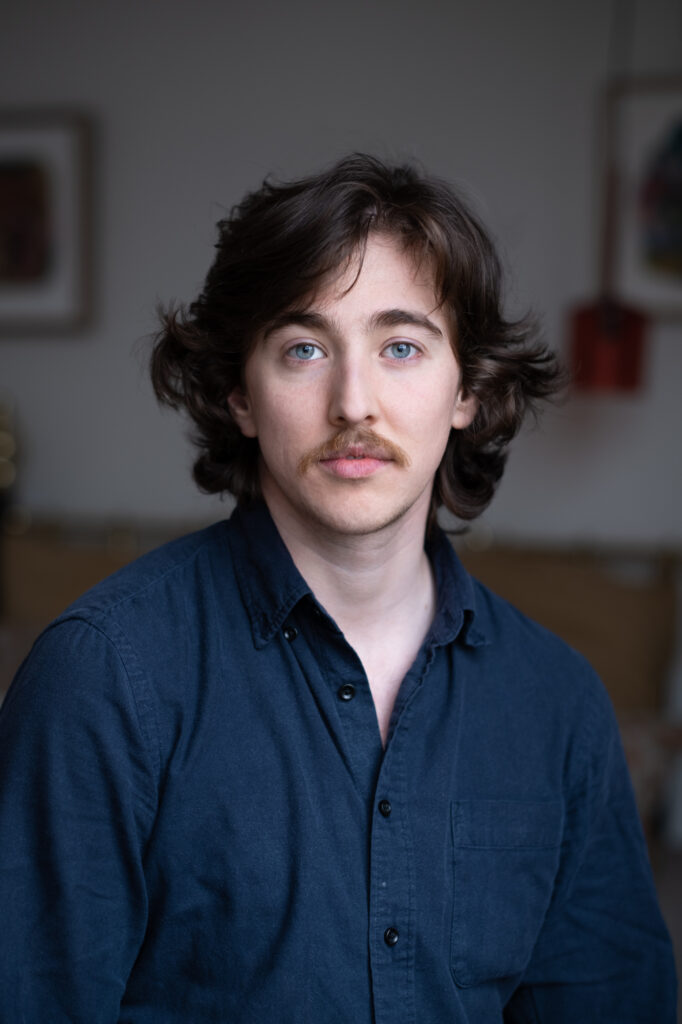
Artist and theatremaker Oliver Ayres (he/him) speaks with Transcend about gardening, making work with care, finding connection in a crowd, and imagining fatherhood.
When Ollie describes his life at the moment, he starts with the small things. He is 30, lives with his fiancée in a yellow house that is slowly sinking into the clay beneath it, likes to garden, listens to a lot of music and makes food for the people he loves.
Born in Toronto, raised in Sydney and now living in Melbourne, Ollie is a trans man, actor, performer and theatremaker whose work moves between theatre, installation and performance art. His latest work, No Seasons, draws on his own experience of freezing his eggs before starting testosterone, and the questions about IVF and parenthood that have followed almost a decade later.
We spoke about what it means to call yourself an artist, creating work that makes room for different experiences, the joy of a garden you’ve grown yourself, and looking towards a future as a dad.
A life in seasons
Where are you finding joy in your life at the moment?
It’s kind of everywhere. I have some very dear friends staying with me, and it has been so wonderful making dinners together, doing dishes and having the door to the garden open as the weather shifts and warms up well into the evenings.
I went to a concert the other night and that really filled my cup. I’m also finding a lot of joy in being helpful right now. It’s exciting to be at a point in life where I can talk to other artists and pass on some wisdom.
I’m receiving a lot of that love from others too, so it’s lovely to sit inside the web and feel connected to my community.
Finding home in art
You move between acting, writing, directing and making your own work. Do any of those feel more like “home”?
All of them are different neighbourhoods with their own place within them that feels like ‘home’.
Acting was one of my first loves, but my vision for what I want from my life and work has evolved so much over the past decade. I can act, and for that I’m probably an ‘actor’, but I feel like what I make lives much closer to ‘performer’, possibly even bordering on ‘dancer’, which is NOT at all what I thought would happen!
I feel like the word ‘artist’ is where I’m most at home. It covers the other bits and pieces, but I enjoy putting things together, creating contrast and shape and form.
What draws you to the space between theatre, gallery installation and performance art?
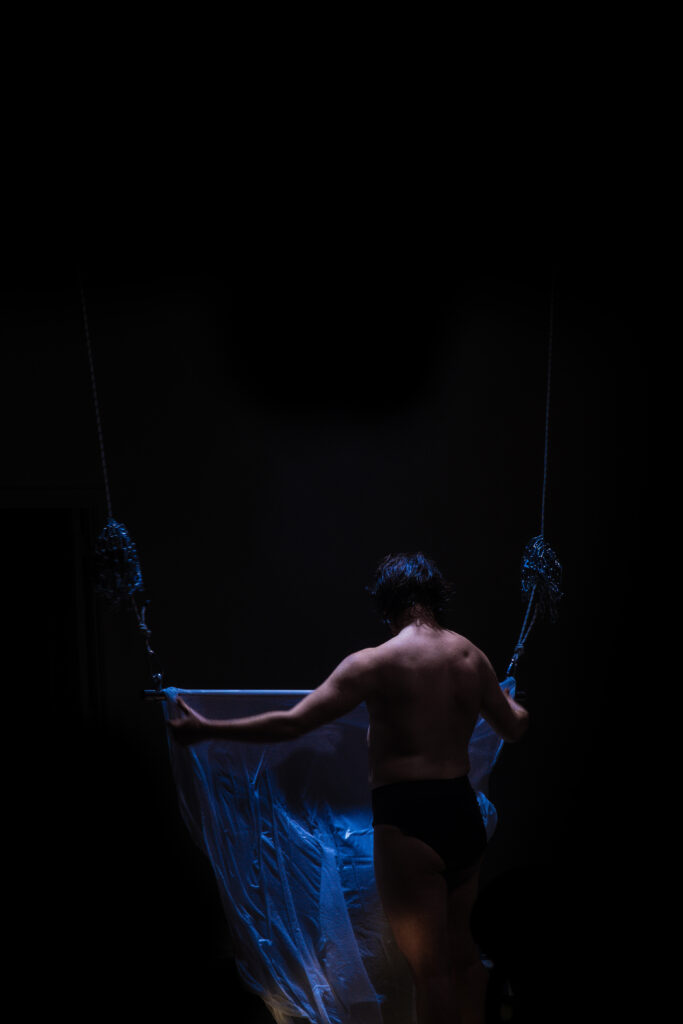
My work has a story, but no clear linear narrative. It has performance, but not exactly acting. It has set, costume and props, but the set is there to establish ‘place’ rather than signal a container with four walls that we peer into, like with a play.
It includes the audience in a different way. When you’re in my work, you are also inside the set, and sometimes even part of the stage is yours to share.
I think what draws me to this in-between is my focus on audience experience. I don’t think so much about what I would like to do on stage. I obsess over what someone will experience as they come into the world I’ve made.
Making connection and care
Your work often changes the usual relationship between performer and audience. What interests you about creating that kind of intimacy?
I’m really curious about how we can become connected through loneliness or isolation.
I’m Ready To Talk Now focuses on the connection between my experience and the audience member’s experiences of illness and clinical settings. In No Seasons, I’m interested in how I can create connection through having multiple singular experiences in tandem with strangers.
It’s kind of the main question at the centre of my artistic practice: how do I get you on your own when you’re in a crowd? How can I make work that speaks so specifically to one person, but can also speak that way to an entire group simultaneously?
You’ve spoken about access as something that can shape the art itself, rather than something added at the end. Has that changed the kind of artist you are?
Completely. I’ve had so many learnings in the last few years about creative access. It’s exciting to see access as something inherently creative and artistic, rather than a clinical element tacked onto a performance with a very specific non-disabled audience in mind.
People with different needs will inherently have different experiences, and I think we should lean into that rather than try to replicate a non-disabled experience of live art for a disabled audience.
The best part is that we are not the same. It feels like makers are beginning to actually listen to and connect with disabled communities, and some really interesting conversations are happening.
Growing something
What’s something you’re proud of that has nothing to do with your career?
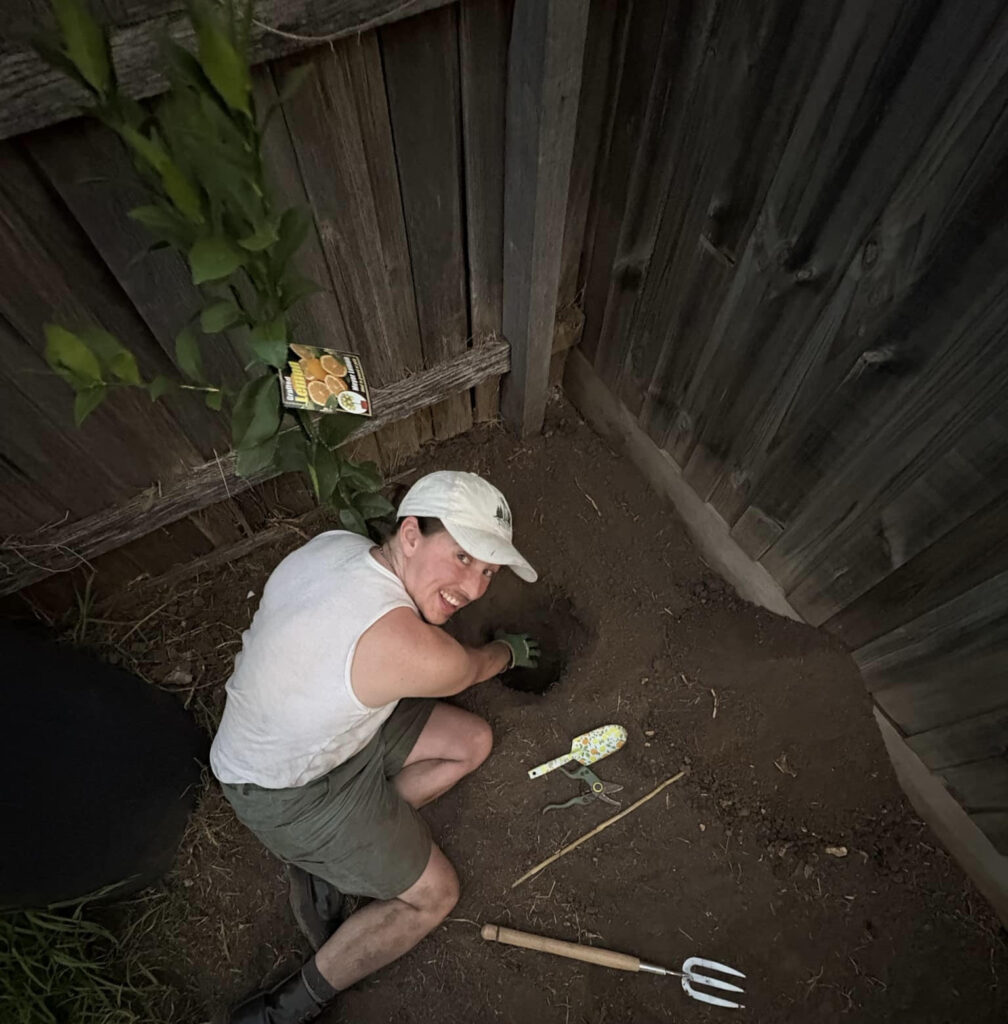
My garden. I took up gardening when I got sober, almost two years ago. I ripped out all the grass with my hands because I was a wreck and also because it was fun.
I’ve planted so many wonderful things, and I get to watch the people I love go shopping in the backyard. I have a mandarin tree that is a whole story unto itself, but it taught me so much about discipline and love and reward.
Whenever I go outside, I can take a moment and go, damn, I helped that happen. That used to be empty, and now it’s full of flowers and herbs and bees and things to eat.
Looking towards fatherhood
In No Seasons, something you did at 19 with a hypothetical future in mind has become a very real question about parenthood almost a decade later. What has it been like to arrive at a future that once felt so far away?
Surreal. I really sucked all of the juice out of my twenties, and thirty is like standing on top of the mountain, enjoying the view.
It feels exciting to be at a place that was so distant. It gives me a lot of hope for all of my other distant places.
What is it about becoming a dad that feels important to
you?
Being a dad feels like a natural progression to me. I don’t know when it will happen yet, but I know that it should.
Because of this IVF journey, it feels like there is so much possibility and it really comes down to timing. I want to nurture someone’s childhood. For me personally, it feels like the most important thing I could possibly do.
Has imagining yourself as a father changed the way you
think about masculinity?
Not necessarily. There are plenty of ways my relationship with and understanding of masculinity has changed and developed, but the image of who I want to be as a parent has shifted and grown in the same way I have overall.
I had a stay-at-home dad growing up, which is what I’d love to be. Gender roles were very fluid in my childhood home. Mum was very career-focused and Dad did a lot of the childcare, with many areas, particularly domestic work, split between them.
Dad ironed my school uniform and packed my lunch. Mum travelled around the country working. They both planned the birthday parties. I had no idea how lucky I was until I got a little older.
Ollie’s latest work, No Seasons, is showing at Brisbane Powerhouse as part of MELT Festival on 30 and 31 October 2026. The experimental work explores IVF, parenthood and Ollie’s own questions about the pathways to fatherhood, with audiences choosing between three different perspectives through headphones.
You can learn more about Ollie and his work at oliverayres.com.au, or find No Seasons and book tickets through Brisbane Powerhouse.